
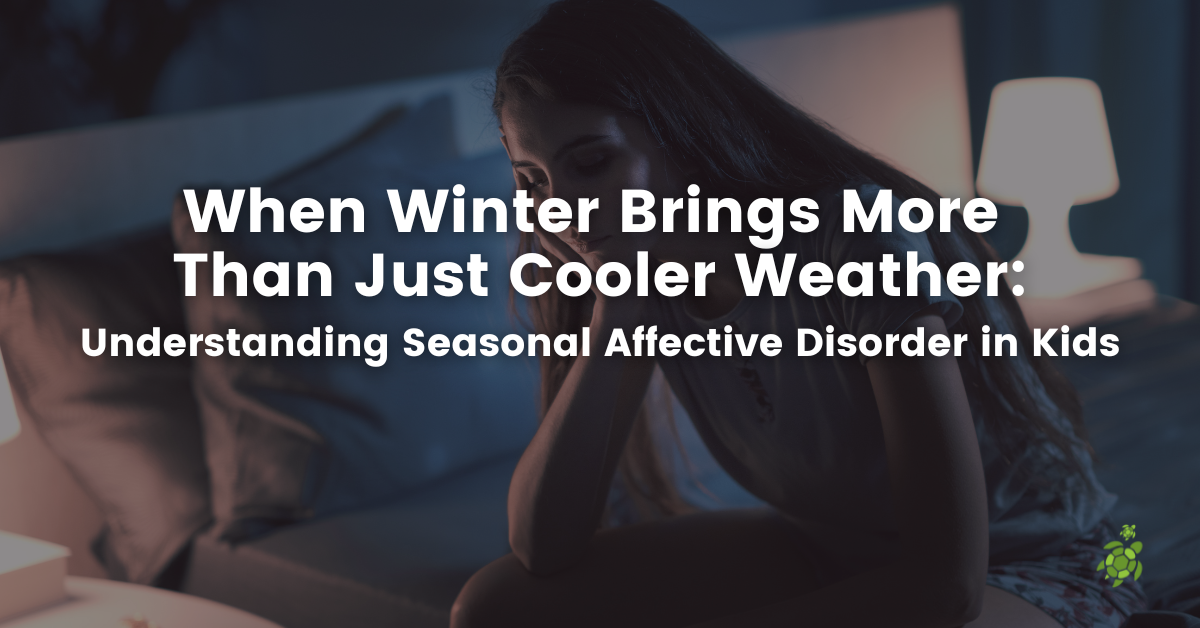
When you think of winter in Jacksonville, you might picture mild temperatures, sunny afternoons walking on the beach, and kids playing outside in hoodies instead of heavy coats. We may not deal with the harsh, dark winters that many parts of the country experience, but even here in Northeast Florida, seasonal changes can affect our moods in ways we might not expect.
What is Seasonal Affective Disorder?
Seasonal Affective Disorder (SAD) is a form of depression that follows a seasonal pattern, usually showing up in late fall and winter and improving during spring and summer. Although it’s often linked to regions with significant seasonal changes, children everywhere can be affected by shifts in daylight, routines, and even the subtle changes in our “winter” weather.
Can Kids Really Get SAD?
Yes. While we often think of depression as something that affects adults, children and teens are also vulnerable to SAD. In fact, because kids may not have the words to describe what they’re feeling, seasonal mood changes can easily be overlooked or dismissed as just “acting out” or “being moody.”
What Does SAD Look Like in Children?
The signs of Seasonal Affective Disorder in kids can vary, but here’s what to watch for:
Mood and Behavior Changes:
- Increased irritability, sadness, or crying
- Loss of interest in activities they usually enjoy
- Withdrawing from friends and family
- More frequent emotional outbursts (especially in younger children)
Physical Symptoms:
- Changes in sleep patterns (sleeping too much or having trouble sleeping)
- Low energy, even after a full night’s rest
- Changes in appetite or weight
Social Changes:
- Reluctance to go to school or participate in activities
- Decreased performance in school
- Complaints of feeling “bored” or “blah” all the time
If you notice these patterns emerging as the days get shorter or the seasons change, it’s worth paying attention.
We Live in Florida. Does This Really Apply to Us?
That’s a fair question. Jacksonville doesn’t face the winter darkness that places like Detroit or Boston do. But seasonal changes still have an impact on us, and here’s how:
Shorter Days Still Matter
Even in Florida, we lose about two hours of daylight between summer and winter. That means less time outside after school, less natural light exposure, and shifts in our internal clocks.
Routine Disruptions
The holiday season brings schedule changes, travel, family stress, and interruptions to normal routines. For kids who rely on structure, this can be unsettling.
Weather Variability
Jacksonville’s “winter” can be unpredictable. One day it’s 75 and sunny, the next it’s 45 and rainy. These fluctuations can impact outdoor activities, physical activity levels, and mood regulation.
Holiday Pressure
The season brings joy for many families, but for others, it can highlight loss, financial stress, or family conflict. Kids pick up on this stress, even when we think we’re hiding it well.
How to Support Your Child’s Mental Health This Season
The good news is that there are practical and effective ways to help your child manage seasonal mood changes.
Prioritize Natural Light
Get outside during daylight hours whenever possible. Morning light is especially helpful for regulating mood and sleep. Pack a picnic lunch for the park, take an after-school walk, or let your child play outside before homework time.
Keep Routines Consistent
Even with holiday chaos, try to stick to regular sleep schedules, meal times, and daily routines. Predictability helps kids feel secure.
Stay Active
Physical activity is one of the most effective mood boosters. Encourage outdoor play, family bike rides along the Riverwalk, or even dance parties in the living room. Jacksonville’s mild winters make outdoor activities possible all year—take advantage of them.
Create Cozy Connections
Winter is a great time for family bonding. Cook together, read books, play board games, or work on a puzzle. Connection is powerful medicine for mood.
Watch Screen Time
It’s tempting to let kids retreat to screens when it’s cooler or darker outside, but too much screen time can worsen mood and sleep issues. Set reasonable limits and offer engaging alternatives.
Talk About Feelings
Create space for your child to share how they’re feeling. Normalize emotions by saying things like, “Sometimes when the days are shorter, people feel a little more tired or sad. That’s okay. Let’s figure out what helps you feel better.”
When to Seek Help
Trust your gut. If something feels off with your child, it probably is. Here are some signs that it’s time to contact a mental health professional:
- Symptoms last more than two weeks
- Talk of self-harm or not wanting to be alive
- Significant changes in eating or sleeping
- Withdrawal from activities and relationships
- Declining school performance
- Physical complaints with no medical cause
You don’t need to wait until things become a crisis to ask for help. Getting support early can stop symptoms from getting worse and help your child build coping skills that will benefit them for years to come.
You’re Not Alone
If you’re noticing seasonal changes in your child’s mood, you’re not imagining it, and you’re not alone. Even here in sunny Jacksonville, kids can struggle during the darker, more unpredictable months. The good news is that with awareness, support, and sometimes professional help, children can learn to manage these feelings and thrive all year long.